Do you need an International Driving Permit in Sri Lanka?
Yes. Sri Lanka is a party to the 1949 Geneva Convention on Road Traffic, which recognises an International Driving Permit valid for up to 1 year when carried with your national licence.
- Convention
- 1949 Geneva Convention
- Permit valid up to
- 1 year
- In force since
- 26 July 1957
Sri Lanka and the road traffic conventions
| Convention | Status | In force since | Permit validity |
|---|---|---|---|
| 1968 Vienna Convention | Not a party | — | — |
| 1949 Geneva Convention | Acceded | 26 July 1957 | 1 year |
Which vehicles your permit covers in Sri Lanka
Sri Lanka applies the vehicle classes set out by the 1949 Geneva Convention. Your permit only covers the classes that are already on your national licence, so a category you do not hold at home is not granted by the permit.
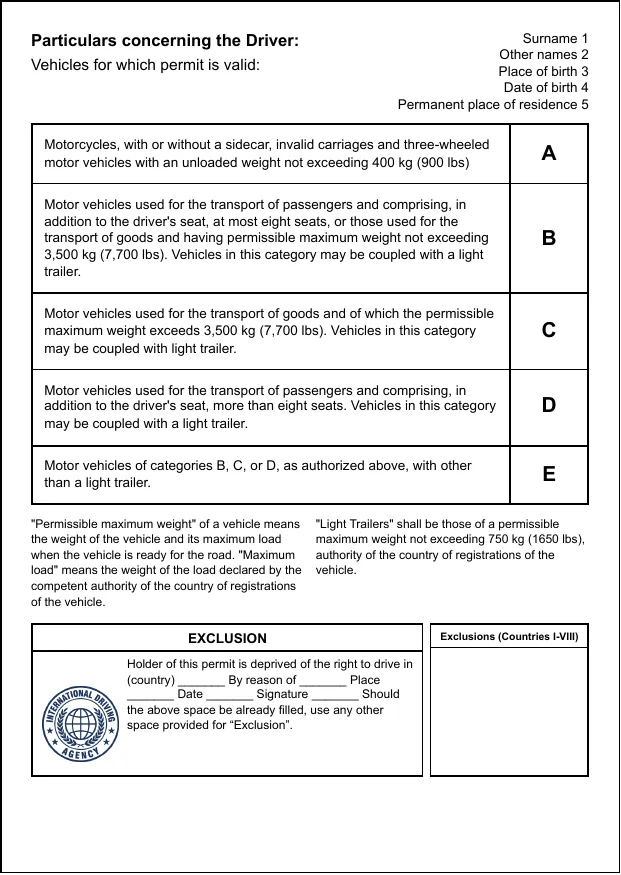
- A
- B
- C
- D
- E
What to carry when you drive in Sri Lanka
An International Driving Permit never replaces your national licence. It is a standardised translation that local police and rental desks can read, and it is only valid alongside the licence it was issued against. Carry both, and keep your passport handy at rental pickup, since most rental companies ask to see all three before releasing a vehicle.
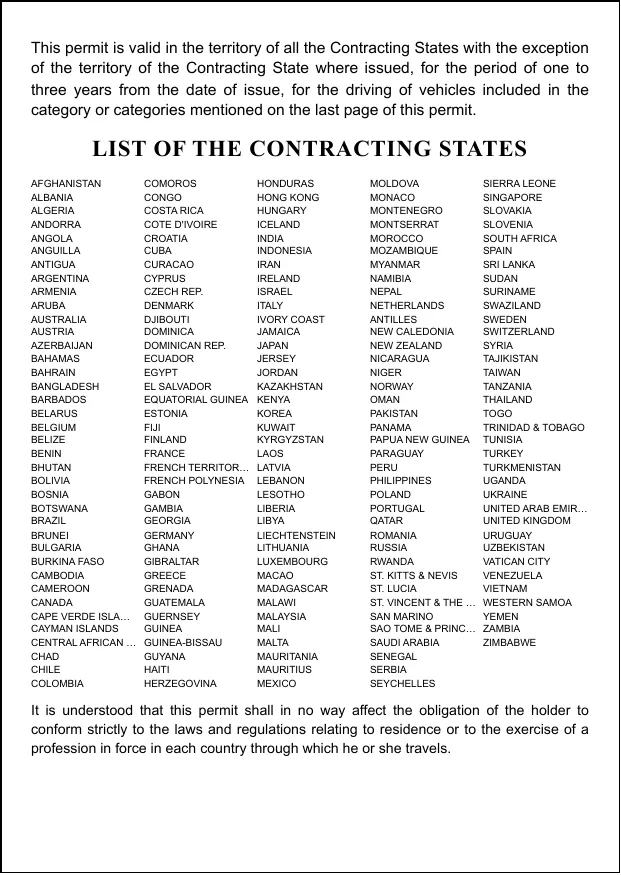
Our document reproduces your licence details across 12 languages in the booklet format the conventions describe, so an officer who reads none of them in your alphabet can still find your name, date of birth and vehicle classes:
- English
- French
- Spanish
- Portuguese
- Italian
- German
- Russian
- Arabic
- Chinese
- Japanese
- Thai
- Vietnamese
What the road rules say in Sri Lanka
The UK Foreign Office and the Government of Canada both advise carrying an International Driving Permit alongside your national licence in Sri Lanka.
- Traffic drives on
- The left
- Emergency services
- fire 111
The UK Foreign Office names the 1949 convention for Sri Lanka, which matches the United Nations depositary record above.
Common questions about driving in Sri Lanka
- How long is an International Driving Permit valid in Sri Lanka?
- Up to 1 year. Sri Lanka joined the 1949 Geneva Convention on Road Traffic on 26 July 1957 by accession, and that convention sets the maximum at 1 year from the date of issue, or until your national licence expires if that comes first.
- Can I drive in Sri Lanka on my national licence alone?
- The UK Foreign Office states: "You need a 1949 international driving permit (IDP) and a Sri Lankan ‘recognition permit’ to drive a hire vehicle." Rules differ by the country that issued your licence and by how long you stay, so confirm with Sri Lanka's road authority before you travel.
- Which side of the road does Sri Lanka drive on?
- The left. If you normally drive on the right, take extra care at junctions and roundabouts for the first few days, and consider an automatic hire car so you are not also changing gear with the other hand.
- What do I dial in an emergency in Sri Lanka?
- Reach fire on 111. The UK Foreign Office publishes these numbers for Sri Lanka. Save them before you drive, since you will not want to be searching for them at the roadside.
- Does the permit replace my driving licence in Sri Lanka?
- No. It is a translation of the licence you already hold and has no effect on its own. You must carry your original national licence with it at all times.
Driving in Sri Lanka?
Get your International Driver's License Translation in 5 minutes. Digital delivery, valid in 195+ countries.
Start my applicationSources
- Convention on Road Traffic (Vienna, 8 November 1968) United Nations Treaty Collection, 91 parties. Checked 4 August 2026.
- Convention on Road Traffic (Geneva, 19 September 1949) United Nations Treaty Collection, 103 parties. Checked 4 August 2026.